For sellersStep by step
How to sell a property in Egypt, step by step: from your papers to registration
 Feinh Editorial Team
Checked on · 7 min read
The short answer
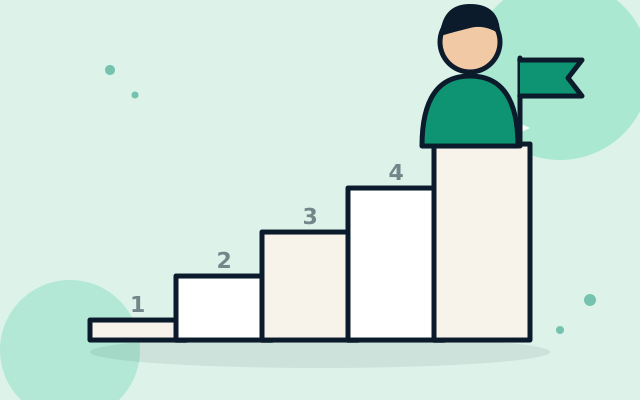
Selling a home in Egypt takes eight steps: prepare your papers, set the price, choose a registered broker or sell yourself, list and show the home, agree the offer and a written arboun, sign the final contract and hand over against payment, register the sale at the Real Estate Registry, and pay the 2.5% tax within 60 days. Only registration moves ownership (Civil Code, Article 934), and once the notarised deed reaches the Registry office it must complete registration within 7 days (Law 114 of 1946, Article 28).
Key numbers
- 8 stepsFrom your papers to the tax clearance
- 7 daysFor the Registry office to complete a registration once the notarised deed reaches it (Law 114, Article 28)
- 2.5%Tax on the full contract price, with no deductions, paid by the seller (Income Tax Law, Article 42)
- 60 daysTo pay it from the date of the sale, since Law 151 of 2026
In this guide (10)
The process at a glance
| Step | Who does it | The rule behind it |
|---|---|---|
| 1. Get your papers ready | You | Only registration moves ownership (Civil Code, Article 934; Law 114 of 1946, Article 9) |
| 2. Set the price | You, with local agents | A sale is for a price in money (Civil Code, Article 418), and the tax is on the contract price (Income Tax Law, Article 42) |
| 3. Choose how to sell | You | Brokers must be on GOEIC's register (Law 120 of 1982, as amended by Law 21 of 2022) |
| 4. List and show the home | You or your agent | Describe it so the buyer knows it well enough (Civil Code, Article 419) |
| 5. Agree the offer and the arboun | You and the buyer | Civil Code, Articles 89 to 103 |
| 6. Sign, get paid and hand over | You and the buyer | Price due at handover unless agreed otherwise (Civil Code, Articles 456 to 459) |
| 7. Register the sale | Usually the buyer, with your signature | Law 114 of 1946, as amended by Law 9 of 2022 |
| 8. Pay the 2.5% tax | You | Within 60 days (Income Tax Law, Article 42, as replaced by Law 151 of 2026) |
1. Get your papers ready
Under Article 934 of the Civil Code and Article 9 of the Real Estate Registration Law (Law 114 of 1946), ownership of property passes only on registration, and an unregistered contract creates only personal obligations. So the buyer's lawyer will want to see how ownership reached you. Have these ready before you list:
- Your national ID, and every co-owner's.
- Your title: the registered deed, or every contract from the developer or first owner down to you.
- A special power of attorney, if someone will sign for you: under Article 702 of the Civil Code, selling needs one.
- The registered inheritance, if you inherited the home: under Article 13 of Law 114, no sale by an heir can be registered until the inheritance is.
Our guide to the documents you need to sell has the full checklist.
2. Set the price
There's no official price list for resale homes. Compare your home with similar homes in the same compound or district, adjust for floor, view and finishing, and decide the lowest price you'd accept before the first offer. Remember that the 2.5% tax is worked out on the full price written in the contract, so the price you sign is the price you're taxed on. A free valuation on Feinh does this with you, and our guide on how to price your property shows the method.
3. Decide how you'll sell
You can sell on your own or through a broker. If you use one:
- Check the register. Under Law 120 of 1982 as amended by Law 21 of 2022, anyone who brokers the sale or rental of property must be on the register of real estate brokers kept by GOEIC, the General Organization for Export and Import Control. GOEIC publishes the list of current registrations.
- Agree the fee in writing. Under the Trade Law (Law 17 of 1999), a broker earns the fee only when their work leads to a concluded contract (Article 194), is paid by the party who hired them (Article 198), and where no fee was agreed, custom decides it (Article 193).
- Expect ID checks. Brokers are covered by the Anti-Money Laundering Law (Law 80 of 2002) and must verify their clients' identity.
You can also check agents on Feinh Verify, and our guide on selling with an agent or on your own compares the two.
4. List the home and show it
- Describe it exactly. Under Article 419 of the Civil Code, the buyer must know the property well enough, and under Article 433, if the contract states the size, you answer for a shortfall. Give the real size, floor and finishing.
- Show clear photos of every room. See how to prepare and photograph your home.
- List where buyers trust what they see. Every home on Feinh is checked with the owner before it goes live. You can list your property yourself, free.
- Keep originals at home. Show copies at viewings.
5. Agree the offer and the arboun
Under Article 89 of the Civil Code, a contract exists once two people exchange matching intentions, so answer offers in writing and say exactly what you accept. When you agree, the buyer usually pays an arboun. Under Article 103, unless you agree otherwise, a buyer who then withdraws loses it, and a seller who withdraws pays back double. Under Article 101, a promise to sign the final contract later must state all the essential terms and the period for signing.
Our guide to the arboun and closing safely has the full list of what to include.
6. Sign the final contract, get paid, hand over
- Have a lawyer draft or review the contract. It should state the price and how it's paid, the handover date, what's included and that the home is sold free of other rights. Under Article 428, you must do what's needed to transfer ownership, which means signing for registration.
- Price against keys. Under Articles 456 and 457, the price is due when and where the home is handed over, unless you agree otherwise, and under Article 459 you may keep the home until you're paid what's due.
- Get paid through a bank. A transfer into your own account is a clear record for both of you, for registration and for the tax.
- Hand over the home as it was when sold (Article 431), with everything permanently fixed to it (Article 432), and sign a short handover note.
7. Register the sale
Registration is what moves ownership to the buyer. Under Law 114 of 1946 as amended by Law 9 of 2022:
- The application goes to the Registry office for the home's area, signed by the seller or the buyer, and can be filed electronically where that's available (Article 21).
- It must include each party's identity, an official digital map with the home's coordinates, the title document and a declaration of rights over the home (Article 22), with the draft deed (Article 22 bis).
- Once reviewed, the deed is notarised and the Registry office completes the registration within 7 days of receiving it (Article 28).
- If the office refuses or asks for something you dispute, you can apply within 10 days for a provisional number, and the judge decides within 7 days (Article 35).
- Unregistered chain? Five years of good-faith possession backed by a contract can be registered (Article 10 bis), with an investigation in 30 days and a committee decision in 7 days (Article 23 bis).
- Fees are set by Law 70 of 1964 on notarisation and registration fees; ask the office for the total before you file.
A signature validity judgment (Sehat Tawqi') only confirms a signature (Evidence Law, Article 45). It doesn't register the sale, so it doesn't end your legal link to the home the way registration does.
8. Pay the 2.5% tax
Under Article 42 of the Income Tax Law (Law 91 of 2005), as replaced by Law 151 of 2026 (in force since 29 July 2026), you owe 2.5% of the full price in the contract, with no deductions, whether or not the sale is registered, and you must pay it within 60 days of the sale. Late payment adds the charge in Article 110. Selling your own home isn't treated as trading, even more than once, unless the Tax Authority proves you bought or built to trade. In Greater Cairo and Alexandria, the Tax Authority's real estate disposals system lets you file, pay and download a clearance certificate the buyer can verify. Read our guide to taxes and fees when you sell for a worked example.
After the sale
- Utilities and service charges. Ask the electricity, water and gas providers how to move the accounts to the buyer, and settle your final bills. In a compound, ask the management how the maintenance deposit passes to the new owner.
- Revoke any power of attorney you gave for the sale once it's complete.
- Keep copies of the contract, payment records, the registered deed and the tax clearance certificate.
Ready to start? Compare local agents and ask up to three for a free valuation.
General information from official sources, checked on 31 October 2026. Not legal advice; for your own case, ask a lawyer or the office named above.
Questions people ask
What are the steps to sell an apartment in Egypt?
Prepare your papers, set the price, choose a registered broker or sell yourself, list and show the home, agree the offer and a written arboun, sign the final contract and hand over against payment, register the sale at the Real Estate Registry, and pay the 2.5% tax within 60 days.
How long does registration at the Real Estate Registry take?
Under Law 114 of 1946 as amended by Law 9 of 2022, once the application is reviewed and the deed notarised, the Registry office completes registration within 7 days of receiving it (Article 28). A possession-based application is investigated within 30 days and decided within 7 more (Article 23 bis).
Does a real estate broker in Egypt need to be registered?
Yes. Under Law 120 of 1982 as amended by Law 21 of 2022, anyone who brokers the sale or rental of property must be on GOEIC's register of real estate brokers. GOEIC publishes the list of current registrations, and under Article 194 of the Trade Law the broker earns the fee only when a contract is concluded.
Is Sehat Tawqi' enough to sell a property?
A signature validity judgment only confirms that a signature is genuine (Evidence Law, Article 45). Ownership of property passes only on registration (Law 114 of 1946, Article 9), so registering the sale protects both you and the buyer better.
When is the buyer supposed to pay?
Under Articles 456 and 457 of the Civil Code, the price is due when and where the home is handed over, unless you agree otherwise, and under Article 459 you may keep the home until you're paid what's due. Take payment by bank transfer into your own account.
Your next step
Compare local agents and ask up to three for a free valuation.
Sources and review
- Court of Cassation legislation portal: Civil Code, Law 131 of 1948 (Articles 89, 101, 103, 418, 419, 428, 431 to 433, 456, 457, 459, 702, 934) (checked 31-10-2026)
- Court of Cassation legislation portal: Real Estate Registration Law, Law 114 of 1946, as last amended on 6 March 2022 (Articles 9, 10 bis, 13, 21, 22, 22 bis, 23 bis, 28, 35) (checked 31-10-2026)
- Court of Cassation legislation portal: Law 9 of 2022 amending the Real Estate Registration Law (Official Gazette, issue 9 bis (A), 6 March 2022) (checked 31-10-2026)
- Court of Cassation legislation portal: Law 70 of 1964 on notarisation and registration fees, as last amended on 13 June 2021 (checked 31-10-2026)
- Court of Cassation legislation portal: Evidence Law, Law 25 of 1968 (Article 45) (checked 31-10-2026)
- Egyptian Tax Authority: Law 151 of 2026 amending the Income Tax Law, Article 42 (Official Gazette, issue 30 bis (A), 28 July 2026) (checked 31-10-2026)
- Egyptian Tax Authority: correction to Law 151 of 2026 confirming the article number is 42 (Official Gazette, issue 32 bis, 8 August 2026) (checked 31-10-2026)
- Egyptian Tax Authority: frequently asked questions on the real estate disposals system (October 2026) (checked 31-10-2026)
- Court of Cassation legislation portal: Law 120 of 1982 on commercial agency and brokerage, as amended by Law 21 of 2022 (checked 31-10-2026)
- GOEIC: register of real estate brokers and list of current registrations (Arabic) (checked 31-10-2026)
- Court of Cassation legislation portal: Trade Law, Law 17 of 1999 (Articles 193, 194, 198) (checked 31-10-2026)
- Court of Cassation legislation portal: Anti-Money Laundering Law, Law 80 of 2002 (checked 31-10-2026)
Written by the Feinh Editorial Team and checked against these sources on 31-10-2026.
This guide is general information, not legal, tax or financial advice. Rules and fees change, so confirm the figures for your case with a lawyer or the relevant authority before you sign or pay. Spotted something out of date? Tell us.