For sellersLegal and paperwork
The arboun deposit and closing a property sale in Egypt: what the Civil Code says
 Feinh Editorial Team
Checked on · 7 min read

The short answer
Under Article 103 of the Egyptian Civil Code, paying an arboun when the contract is made gives each side the right to withdraw, unless you agree otherwise: a buyer who withdraws loses the arboun, and a seller who withdraws pays back double, even if nobody suffered a loss. So write in one sentence whether the arboun is the price of withdrawing or part of a firm sale. Then close in the Civil Code's order: the price is due at handover, and only registration at the Real Estate Registry moves ownership.
Key numbers
- Article 103Of the Civil Code governs the arboun
- DoubleWhat a seller who withdraws pays back, unless the agreement says otherwise
- 7 daysFor the Registry office to complete a registration once the notarised deed reaches it (Law 114 of 1946, Article 28)
- 60 daysTo pay the 2.5% tax on the sale price (Income Tax Law, Article 42, as replaced by Law 151 of 2026)
In this guide (8)
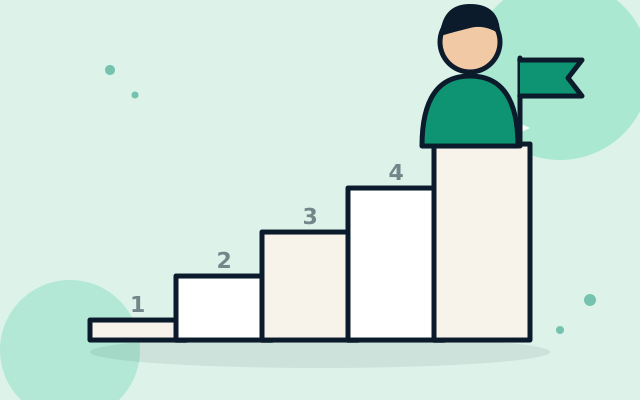
From "yes" to keys: the four stages
A resale in Egypt usually moves through four stages. Each one has its own paper, and each paper protects you only if it says what you actually agreed.
| Stage | What happens | The paper | The rule behind it |
|---|---|---|---|
| 1. The offer | The buyer offers a price and terms, and you answer | A written offer and a written reply | Civil Code, Articles 89 to 94 |
| 2. The arboun | The buyer pays a deposit to hold the home | An arboun agreement | Civil Code, Articles 101 to 103 |
| 3. The final contract | The price is paid and the home is handed over | The final sale contract and a handover record | Civil Code, Articles 418 to 459 |
| 4. Registration and tax | Ownership moves to the buyer; you pay the 2.5% tax | The registered deed and the tax clearance | Law 114 of 1946; Income Tax Law, Article 42 |
Offers: when a "yes" becomes a contract
Under Article 89 of the Civil Code, a contract exists as soon as two people exchange matching intentions. In other words, a clear offer and a clear acceptance can already bind you, even before anything is signed. Two more rules matter when you're negotiating:
- An offer with a deadline binds the person who made it until the deadline passes (Article 93). If you write "this price stands until Thursday", you're held to it until Thursday.
- An offer made face to face, or by phone, without a deadline lapses if it isn't accepted straight away (Article 94), unless it's accepted before the conversation ends and the offer wasn't withdrawn.
So answer every offer in writing, say exactly what you accept, and add a deadline if you want time to think. Don't take a deposit from more than one buyer for the same home. If you don't yet know what your home is worth, ask for a free valuation.
What Article 103 says about the arboun
The arboun is governed by Article 103 of the Civil Code. Paying an arboun when the contract is made means that each side keeps the right to withdraw, unless the agreement says otherwise. Then:
- If the buyer who paid it withdraws, they lose the arboun.
- If you, the seller who received it, withdraw, you pay back double.
- This applies even if the withdrawal caused nobody any loss.
The words "unless the agreement says otherwise" are the key to the whole article. The two of you can agree that the arboun is a part-payment of a firm sale, with no right to walk away, or that it's the price of the right to withdraw. If the paper is silent, the default rule above applies, and a dispute over what you meant ends up in court.
What the arboun agreement should say
The law sets no amount and no standard deadline for an arboun, so the agreement is where you set both. Two articles shape what it must contain. Under Article 101, a promise to sign a contract later only binds if it states all the essential terms of that contract and the period within which it must be signed. Under Article 102, if one side then refuses to sign, the other can go to court, and a final judgment can take the place of the contract. Under Article 419, the buyer must know the property well enough, which a clear description of the home provides; and under Article 433, if the contract states the size, the seller answers for a shortfall.
Ask your lawyer to draft or review it. It's a short document that decides what happens to real money.
Getting paid and handing over
The Civil Code sets the default order of a sale, and you can change it only by agreement:
- The price is due when the home is handed over, at the place of handover, unless you agree otherwise (Articles 456 and 457).
- If any part of the price is due now, you may keep the home until you're paid (Article 459). In practice: keys against payment, not before.
- You hand over the home in the condition it was in when you sold it (Article 431), with everything permanently fixed to it for its use (Article 432). List what stays in the contract so nobody argues later.
- Take payments by bank transfer into your own account. It's a clear record for both of you, for the registration file and for the tax.
Record the handover in a short signed note: the date, meter readings, keys handed over and the condition of the home.
The final contract and registration
The final contract is the sale itself. Under Article 418, a sale obliges the seller to transfer ownership to the buyer for a price in money, and under Article 428 you must do what's needed to transfer it and avoid anything that makes the transfer impossible or harder. For property, that means registration. Article 934 of the Civil Code and Article 9 of the Real Estate Registration Law (Law 114 of 1946) say ownership of property doesn't pass, even between the two of you, until the sale is registered; until then the contract creates only personal obligations.
What registration involves since Law 9 of 2022:
- The application goes to the Registry office for the area where the home is, signed by the seller or the buyer, and can be filed electronically where that's available (Article 21).
- It must include each party's identity, an official digital map with the home's coordinates, the document your title rests on, and a declaration of any rights over the home (Article 22).
- After review, the deed is notarised and sent to the Registry office, which completes the registration within 7 days of receiving it (Article 28).
- If two applications are filed for the same home, they're examined in the order they were entered (Article 33). Registering promptly protects your buyer, and you.
For a developer unit, the developer's own transfer approval usually comes first. Our guide to selling off-plan before delivery covers it.
The tax you pay as the seller
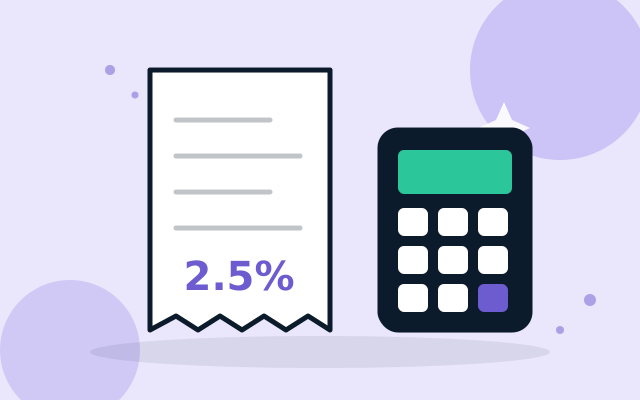
Under Article 42 of the Income Tax Law (Law 91 of 2005), as replaced by Law 151 of 2026 (in force since 29 July 2026), you owe 2.5% of the full price in the contract, with no deductions, whether or not the sale is registered, and you must pay it within 60 days of the sale. Late payment adds the charge set by Article 110. The Egyptian Tax Authority's real estate disposals system lets you register the sale, upload the contract, pay and download a clearance certificate the buyer can verify; it currently covers Greater Cairo and Alexandria. See taxes and fees when you sell.
Protect yourself while you close
- Anyone signing for you needs a special power of attorney. Under Article 702 of the Civil Code, selling is not an act of administration, so a special power is required. Naming the exact home in it is a sensible extra safeguard.
- Forged papers carry prison. Under Article 36 bis of Law 114 of 1946, submitting a forged private contract to register a property is punishable by at least one year in prison and a fine of up to EGP 50,000.
- Use a registered broker. Under Law 120 of 1982 as amended by Law 21 of 2022, anyone who brokers the sale or rental of property must be on GOEIC's register of real estate brokers, and GOEIC publishes the list of current registrations. Under Article 194 of the Trade Law (Law 17 of 1999), a broker earns the fee only when their work leads to a concluded contract. You can also check agents on Feinh Verify.
The buyer's side of these checks is in our guide to the legal checks before you buy.
Ready to sell? Compare local agents and ask up to three for a free valuation.
General information from official sources, checked on 31 October 2026. Not legal advice; for your own case, ask a lawyer or the office named above.
Questions people ask
What happens to the arboun if the buyer backs out in Egypt?
Under Article 103 of the Civil Code, unless your agreement says otherwise, a buyer who paid an arboun and then withdraws loses it, even if the seller suffered no loss.
What happens if the seller backs out after taking the arboun?
Under the same article, unless agreed otherwise, a seller who received the arboun and then withdraws must pay back double the arboun, even if the buyer suffered no loss.
Is the arboun part of the price?
It can be. Article 103 lets the two sides agree what the arboun is: part-payment of a firm sale, or the price of the right to withdraw. If the agreement is silent, the default is a right to withdraw. Say which it is in one clear sentence.
How much should the arboun be when selling an apartment in Egypt?
The law sets no amount. The buyer and seller agree it. Under Article 101 of the Civil Code, a promise to sign a final contract later only binds if it states all the essential terms and the period for signing, so write those down with the amount.
When should I hand over the keys?
Under Articles 457 and 459 of the Civil Code, the price is due when the home is handed over unless you agree otherwise, and a seller who is owed part of the price now may keep the home until paid. In practice: keys against payment.
Your next step
Compare local agents and ask up to three for a free valuation.
Sources and review
- Court of Cassation legislation portal: Civil Code, Law 131 of 1948 (Articles 89, 93, 94, 101 to 103, 418, 419, 428, 431 to 433, 456, 457, 459, 702, 934) (checked 31-10-2026)
- Court of Cassation legislation portal: Real Estate Registration Law, Law 114 of 1946, as last amended on 6 March 2022 (Articles 9, 21, 22, 28, 33, 36 bis) (checked 31-10-2026)
- Court of Cassation legislation portal: Law 9 of 2022 amending the Real Estate Registration Law (Official Gazette, issue 9 bis (A), 6 March 2022) (checked 31-10-2026)
- Egyptian Tax Authority: Law 151 of 2026 amending the Income Tax Law, Article 42 (Official Gazette, issue 30 bis (A), 28 July 2026) (checked 31-10-2026)
- Egyptian Tax Authority: correction to Law 151 of 2026 confirming the article number is 42 (Official Gazette, issue 32 bis, 8 August 2026) (checked 31-10-2026)
- Egyptian Tax Authority: frequently asked questions on the real estate disposals system (October 2026) (checked 31-10-2026)
- Court of Cassation legislation portal: Trade Law, Law 17 of 1999 (Article 194, when a broker earns the fee) (checked 31-10-2026)
- GOEIC: register of real estate brokers under Law 120 of 1982 as amended by Law 21 of 2022 (Arabic) (checked 31-10-2026)
Written by the Feinh Editorial Team and checked against these sources on 31-10-2026.
This guide is general information, not legal, tax or financial advice. Rules and fees change, so confirm the figures for your case with a lawyer or the relevant authority before you sign or pay. Spotted something out of date? Tell us.