For sellersMoney and payments
Taxes and fees when you sell property in Egypt: the 2.5% tax, its 60-day deadline and registration fees
 Feinh Editorial Team
Checked on · 6 min read
The short answer
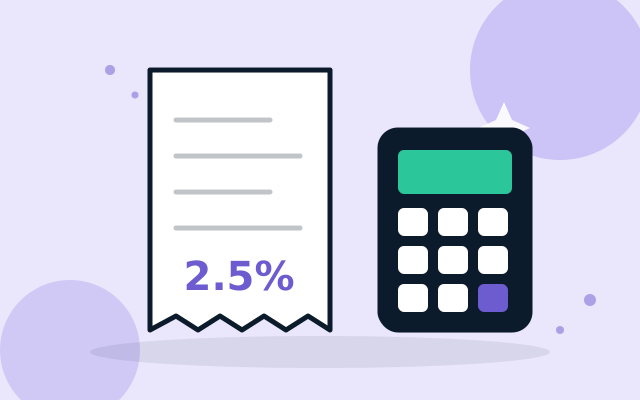
When you sell a home in Egypt you pay a disposal tax of 2.5% of the full sale value, with no deductions, within 60 days of the sale, whether or not the contract is registered (Income Tax Law, Article 42, as replaced by Law 151 of 2026). Heirs who sell pay it too. Registration fees at the Real Estate Registry are capped by law at EGP 2,000 per transaction, and the agent's commission is whatever you agree in writing.
Key numbers
- 2.5%Disposal tax on the full sale value, no deductions (Income Tax Law, Art. 43)
- 60 daysTo pay it from the date of the sale (Law 151 of 2026)
- EGP 2,000Legal cap on registration fees per transaction or unit (Law 83 of 2006)
- 16395Egyptian Tax Authority support line for real estate disposals
In this guide (9)
The costs at a glance
| Cost | What the official rules say | Who pays |
|---|---|---|
| Real estate disposal tax | 2.5% of the full sale value, with no deductions | The seller, within 60 days of the sale |
| Late payment charge | Runs from the day after the 60 days end | The seller |
| Registration at the Real Estate Registry | Capped at EGP 2,000 per transaction or unit, survey costs included | As agreed in the contract |
| Agent commission | Not set by tax or registration law: it's what you agree in writing | Set by your agreement with the agent |
| Developer transfer fee | Not a tax: it's whatever your developer contract says | Usually set by the contract |
The 2.5% disposal tax
The tax on selling a home is set by Article 42 of the Income Tax Law (Law 91 of 2005), in the wording given to it by Law 151 of 2026, published in the Official Gazette, issue 30 bis (A), on 28 July 2026, and in force from the next day.
What the article says, in plain words:
- The rate is 2.5% of the total value of the sale, with no reduction for what you paid or spent. It applies to built property and building land, except in villages.
- It applies however the sale is made: the whole building, part of it or one unit, before or after building on the land, and whether the contract is registered or not.
- The value is the one in your contract. If the Tax Authority doesn't accept that value, the burden of proving otherwise is on the Authority.
- You have 60 days from the date of the sale to pay. The late payment charge under Article 110 of the same law runs from the day after the 60 days end. Older pages online may show a shorter deadline; the current text says 60 days.
- Selling an inherited home is taxed. The 2.5% also applies when an heir sells property that came to them by inheritance, and when an owner sells a home they held for their own use, even if they sell more than once.
- Selling your own or inherited home isn't treated as property trading unless the Tax Authority proves the sales were made as a business to make a profit.
When the tax doesn't apply
The same article lists what is not a taxable disposal:
- Property in villages.
- Forced sales, whether administrative or by a court, and expropriation for public use.
- Gifts or donations to the state, local government, public bodies or public-benefit projects.
- Contributing property in kind to a joint-stock company, if the shares received are not sold for five years.
The article treats as taxable a sale, bequest, donation or gift to anyone other than ascendants, spouses or descendants, and a usufruct right or lease of more than 50 years. If you're transferring a home to a parent, spouse or child, ask your tax office how this applies to your case before you sign.
How to pay: the Tax Authority's real estate disposals system
The Egyptian Tax Authority runs an online system and app for registering a sale, uploading the papers, paying and getting a clearance certificate. According to its own guide (October 2026):
- Create an account with your national ID and a mobile number registered in your name. You don't need a tax registration number.
- Register the sale: the buyer's details, the property, the sale date and the sale value exactly as written in the contract.
- Upload the contract and your ownership papers as PDF files. A phone photo is accepted only for your ID.
- The tax is calculated at 2.5% of the sale value.
- Pay by card in the system or at a bank branch. Part payment is allowed, but any unpaid part still attracts the late charge after 60 days.
- Download the clearance certificate once everything is paid and any review is finished. The buyer can check it online with the clearance number and a national ID number.
Points to know before you press "submit":
- A submitted request can't be cancelled, and the sale value can't be changed after submission. Check every figure first.
- One request per property, and one account per seller: if a flat has two owners, each registers their own share.
- Heirs each file from their own account with the inheritance certificate (e'lam wiratha) and their share.
- Some sales are referred for review; the final tax then depends on the result, and any difference can be challenged through the legal appeal route.
- In October 2026 the system covered Cairo, Giza, Qalyubia and Alexandria, with more governorates to follow. Elsewhere, ask your tax office.
The Tax Authority's support line is 16395. See the Tax Authority's real estate disposals page for the current guides.
Registration fees at the Real Estate Registry
Under Law 83 of 2006, which amended Law 70 of 1964 on notarisation and registration fees (Official Gazette, issue 22 bis, 6 June 2006), the fees for registering a transaction, including survey costs, can't exceed EGP 2,000 for each transaction or property unit. The exact fee category is set by a decision of the Minister of Justice, so ask the Registry office for the current fee for your unit. The fee is fixed by the law, not a percentage of the price; who pays it is a matter for your contract.
Agent commission
No tax or registration law sets an agent's commission. It is whatever you agree, so:
- Agree it in writing before you sign anything, including the amount, when it's due and who pays it.
- Agree what happens if you find the buyer yourself.
- Check the agent first on Feinh Verify, and pay by bank transfer, not cash.
Developer transfer fees
If you're reselling a unit bought from a developer, your contract may charge a fee to transfer it to the new buyer. That's a contract term, not a tax, and the amount is whatever your contract says. Read the transfer clause before you agree a price. Our guide to selling an off-plan unit before delivery explains the steps.
The annual real estate tax
This isn't a cost of selling, but the buyer will ask for proof that the annual tax under the Real Estate Tax Law (Law 196 of 2008) is paid. Settle any arrears and keep the receipts with your sale papers.
A worked example
Selling a home for EGP 6,000,000:
| Item | Amount (EGP) |
|---|---|
| Sale price | 6,000,000 |
| Disposal tax, 2.5% of the full price | 150,000 |
| Registration fee, if your contract says you pay it | up to 2,000 |
| Agent commission | the amount in your written agreement |
| Developer transfer fee, if any | the amount in your contract |
Use the calculator below to see what you keep with your own figures.
Next step
Know your price before you work out your costs: get a free valuation from local agents on Feinh.
General information from official sources, checked on 31 October 2026. Not legal advice; for your own case, ask a lawyer or the office named above.
Estimate what you keep from the sale
Enter the expected price and the costs that apply to you.
- Disposal tax
- Agent commission
- Developer transfer fee
- Unpaid instalments taken over
- Other costs
- What you keep
An estimate, not tax advice. Commission is whatever you agree with your agent in writing, and transfer fees vary by developer. Set any cost to 0 if it doesn't apply to you.
Questions people ask
How much tax do I pay when I sell my apartment in Egypt?
2.5% of the total sale value in your contract, with no deduction for what you paid. On a sale at EGP 6 million that's EGP 150,000. The seller pays it within 60 days of the sale, whether or not the contract is registered.
Is the deadline for the property sale tax 30 days or 60 days?
60 days from the date of the sale, under Article 42 of the Income Tax Law as replaced by Law 151 of 2026, in force since 29 July 2026. The late payment charge runs from the day after the 60 days end.
Do heirs pay tax when they sell an inherited property?
Yes. The 2.5% applies when an heir sells property that came to them by inheritance. Each heir registers their own share from their own account in the Tax Authority's system, with the inheritance certificate. Such a sale isn't treated as property trading unless the Tax Authority proves it was.
How do I pay the real estate disposal tax online?
Through the Egyptian Tax Authority's real estate disposals system or app: create an account with your national ID and a phone in your name, register the sale, upload the contract as a PDF, pay by card or at a bank branch, then download the clearance certificate. In October 2026 it covered Cairo, Giza, Qalyubia and Alexandria. The support line is 16395.
How much are registration fees at the Real Estate Registry?
Law 83 of 2006 caps the fees for registering a transaction, survey costs included, at EGP 2,000 per transaction or unit. The exact category is set by the Minister of Justice, so ask the Registry office for your unit's current fee. The fee isn't a percentage of the price.
Who pays the agent's commission when selling property in Egypt?
No tax or registration law sets it. The commission, who pays it and when it's due are whatever you agree with the agent, so put it in writing before you sign anything and pay by bank transfer.
Your next step
Compare local agents and ask up to three for a free valuation.
Sources and review
- Egyptian Tax Authority: Law 151 of 2026 amending the Income Tax Law, Official Gazette issue 30 bis (A), 28 July 2026 (Article 42, real estate disposals) (checked 31-10-2026)
- Egyptian Tax Authority: FAQ guide to the real estate disposals system and app, October 2026 (Arabic) (checked 31-10-2026)
- Egyptian Tax Authority: taxpayer guide to the real estate transactions app (Arabic) (checked 31-10-2026)
- Egyptian Tax Authority: real estate disposals system page and support line 16395 (Arabic) (checked 31-10-2026)
- Egyptian Tax Authority: the 2.5% tax on real estate disposals continues with no cap (Arabic) (checked 31-10-2026)
- Income Tax Law, Law 91 of 2005, Articles 42 and 110 (checked 31-10-2026)
- Law 83 of 2006 amending Law 70 of 1964 on notarisation and registration fees, Official Gazette issue 22 bis, 6 June 2006, Article 1 (checked 31-10-2026)
- Real Estate Tax Law, Law 196 of 2008 (checked 31-10-2026)
- Egyptian Tax Authority: correction to Law 151 of 2026 confirming the article number is 42 (Official Gazette, issue 32 bis, 8 August 2026) (checked 31-10-2026)
Written by the Feinh Editorial Team and checked against these sources on 31-10-2026.
This guide is general information, not legal, tax or financial advice. Rules and fees change, so confirm the figures for your case with a lawyer or the relevant authority before you sign or pay. Spotted something out of date? Tell us.